15Mar 2024
How to compose the perfect cold cuts and cheese board
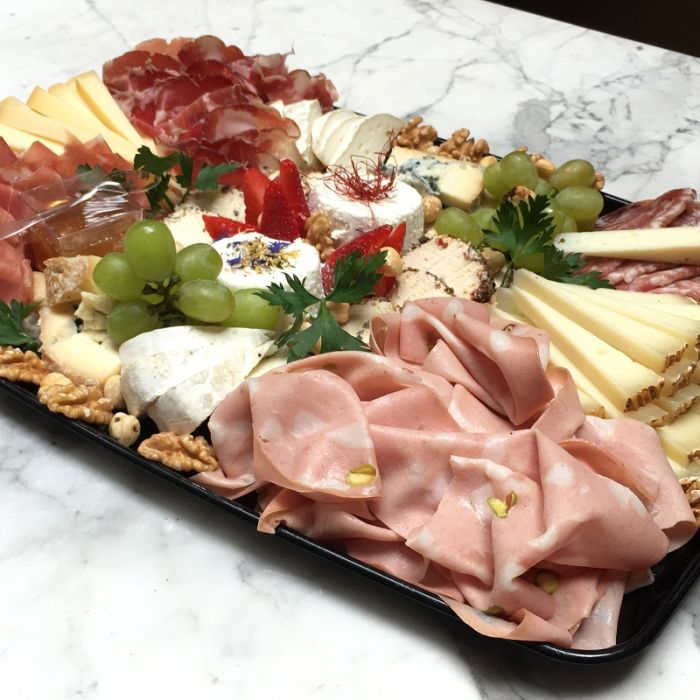
How to compose the perfect cold cuts and cheese board
The charcuterie and cheese board is a classic Italian appetizer, now famous and loved all over the world. Whether you're hosting a dinner with friends and have little time to cook, or if you want to organize a refined tasting of excellent products, perhaps by candlelight, you need to know how to compose it to make your board captivating and harmonious.
With the vast selection of Italian delicacies available, the choices are endless, but it's useful to follow some rules to achieve a perfect presentation.
First and foremost, it's essential to choose the right support, which varies depending on personal taste or the type of occasion you want to present the charcuterie and cheese board.
The wooden board represents a timeless classic, suitable for any setting and always pleasing to the eye. Opting for an olive wood board adds a touch of refinement and authenticity that can make a difference.
A steel tray can be an ideal choice for presenting an assortment of charcuterie and cheese, especially for those who appreciate minimalist style. This solution offers a modern touch, adding a design element to the table.
A beautiful ceramic plate, especially if white, enhances the natural colors of the charcuterie and cheese, suitable for a refined setting.
A slate support has become very popular in recent years, offering a splendid frame and perfect for those who appreciate dark colors and seek a touch of rustic elegance.
A respectable charcuterie board should include at least 5 different varieties of cold cuts and consider at least 2-3 slices per guest.
You can choose from:
• raw cold cuts, a wide selection including prosciutto, various types of salami, speck, pancetta, coppa, guanciale, bresaola, lardo, dried sausage, and more.
• cooked cold cuts, among the most common are roast beef, mortadella, porchetta, cooked ham, and more.
For optimal results, follow these simple but important composition rules:
• If you want to serve both raw and cooked cold cuts, it's advisable to arrange them on two separate boards.
• Organize the cold cuts starting from those with a delicate or sweet flavor and proceed to those with a more intense or spicy flavor.
• Another important rule is to order the cold cuts based on their aging, placing the youngest ones first and the most aged ones last.
• Furthermore, leaner cold cuts should be placed before fattier and marbled ones.
As for the cutting, cold cuts such as mortadella, pancetta, lard, guanciale, hams, and coppa are generally sliced very thin, while salami, especially rustic ones, are cut into slightly thicker transverse slices. Some types of cold cuts, such as mortadella or hams, can also be cut into cubes to be served as appetizers.
First and foremost, it's essential to choose the right support, which varies depending on personal taste or the type of occasion you want to present the charcuterie and cheese board.
The choice of board
The wooden board represents a timeless classic, suitable for any setting and always pleasing to the eye. Opting for an olive wood board adds a touch of refinement and authenticity that can make a difference.
A steel tray can be an ideal choice for presenting an assortment of charcuterie and cheese, especially for those who appreciate minimalist style. This solution offers a modern touch, adding a design element to the table.
A beautiful ceramic plate, especially if white, enhances the natural colors of the charcuterie and cheese, suitable for a refined setting.
A slate support has become very popular in recent years, offering a splendid frame and perfect for those who appreciate dark colors and seek a touch of rustic elegance.
Selection, cutting, and composition of a charcuterie board
A respectable charcuterie board should include at least 5 different varieties of cold cuts and consider at least 2-3 slices per guest.
You can choose from:
• raw cold cuts, a wide selection including prosciutto, various types of salami, speck, pancetta, coppa, guanciale, bresaola, lardo, dried sausage, and more.
• cooked cold cuts, among the most common are roast beef, mortadella, porchetta, cooked ham, and more.
For optimal results, follow these simple but important composition rules:
• If you want to serve both raw and cooked cold cuts, it's advisable to arrange them on two separate boards.
• Organize the cold cuts starting from those with a delicate or sweet flavor and proceed to those with a more intense or spicy flavor.
• Another important rule is to order the cold cuts based on their aging, placing the youngest ones first and the most aged ones last.
• Furthermore, leaner cold cuts should be placed before fattier and marbled ones.
As for the cutting, cold cuts such as mortadella, pancetta, lard, guanciale, hams, and coppa are generally sliced very thin, while salami, especially rustic ones, are cut into slightly thicker transverse slices. Some types of cold cuts, such as mortadella or hams, can also be cut into cubes to be served as appetizers.
Remember that it's essential not to cut the cold cuts in advance, as they could dry out and oxidate in contact with air. It's much better to slice them at the moment or a few minutes before serving. It is also important that the cold cuts are not too cold, they should be tasted at a temperature of 15-18°C to ensure that they release all their aromas.
To compose an excellent cheese board, choose at least 5 different types: a fresh cheese, two semi-aged cheeses, an aged cheese, and a blue cheese.
In this case too, it's important to follow some rules to ensure an attractive presentation and a satisfying tasting experience:
• Start with the youngest cheeses, such as stracchino, mozzarelline, robiola, crescenza, and alike.
• Move on to medium-aged cheeses and soft or stretched curd cheeses, such as brie, taleggio, gorgonzola, provolone, scamorza, fresh fontina, tome, and others.
• Continue with even more aged and semi-hard cheeses, such as medium-aged pecorinos, gruyère, asiago, alpine fontina, bra, and others.
• Finally, include very aged cheeses like parmigiano, grana, aged pecorino, and similar.
As for the cutting, the youngest cheeses can be presented in large pieces or directly in their original form (e.g., robiola and crescenza). Mozzarellas, instead, should be served whole, without cutting them, to avoid water loss. The more aged cheeses can be cut into cubes or sticks of various sizes, while the super-aged ones can be presented in flakes.
Serving temperature is also important for cheese. Be careful to remove the cheeses from the fridge to warm them up, reach the ideal texture and release all their aromas before serving them. Fresh soft cheeses should be served at around 15°C, for all other cheeses the temperature can reach up to 20°C.
For convenience, you can opt for a mixed board that includes both cheeses and cold cuts. However, it's important to consider that in this way the variety could be compromised. If you choose this option, it's recommended to include a maximum of 4 cheeses and 4 cold cuts of different types, focusing on variety and quality of the products.
For true enthusiasts, you can compose a vertical board, which presents only one type of product but declined in different aging or varieties. For example, this technique can be applied to prosciutto crudo or cheeses like pecorinos, blue cheeses, and parmesan.
The boards can be further enriched by pairing them with a variety of additional products, which can be presented separately or combined directly on the board itself. You can pair different types of honey, jams, spicy chutneys, mustards, fresh fruit, pickles, and of course accompany everything with bread, grissini, or crackers.
Regarding honey, it's important to consider pairing it in contrast with cheeses: sweeter honeys like acacia honey can be paired with spicy or blue cheeses, while more bitter varieties like chestnut honey go well with sweeter cheeses.
The same principle applies to jams: a berry jam, sweet but also acidic, can be paired with a delicate and round cheese to enhance its flavor, while a jam with sweeter notes, such as quince, pairs well with spicier and more flavorful cheeses.
As for the charcuterie, bread remains the best pairing. In this case, you can opt for different types of bread, which can be more or less rustic and enriched with seeds or dried fruit, or choose more flavorful options like homemade crackers and grissini. These additional pairings enrich the tasting experience and offer a variety of flavors and textures that will satisfy even the most discerning palates.
Selection, cutting, and composition of a cheese board
To compose an excellent cheese board, choose at least 5 different types: a fresh cheese, two semi-aged cheeses, an aged cheese, and a blue cheese.
In this case too, it's important to follow some rules to ensure an attractive presentation and a satisfying tasting experience:
• Start with the youngest cheeses, such as stracchino, mozzarelline, robiola, crescenza, and alike.
• Move on to medium-aged cheeses and soft or stretched curd cheeses, such as brie, taleggio, gorgonzola, provolone, scamorza, fresh fontina, tome, and others.
• Continue with even more aged and semi-hard cheeses, such as medium-aged pecorinos, gruyère, asiago, alpine fontina, bra, and others.
• Finally, include very aged cheeses like parmigiano, grana, aged pecorino, and similar.
As for the cutting, the youngest cheeses can be presented in large pieces or directly in their original form (e.g., robiola and crescenza). Mozzarellas, instead, should be served whole, without cutting them, to avoid water loss. The more aged cheeses can be cut into cubes or sticks of various sizes, while the super-aged ones can be presented in flakes.
Serving temperature is also important for cheese. Be careful to remove the cheeses from the fridge to warm them up, reach the ideal texture and release all their aromas before serving them. Fresh soft cheeses should be served at around 15°C, for all other cheeses the temperature can reach up to 20°C.
Mixed board
For convenience, you can opt for a mixed board that includes both cheeses and cold cuts. However, it's important to consider that in this way the variety could be compromised. If you choose this option, it's recommended to include a maximum of 4 cheeses and 4 cold cuts of different types, focusing on variety and quality of the products.
Vertical Board
For true enthusiasts, you can compose a vertical board, which presents only one type of product but declined in different aging or varieties. For example, this technique can be applied to prosciutto crudo or cheeses like pecorinos, blue cheeses, and parmesan.
Pairing with charcuterie and cheese
The boards can be further enriched by pairing them with a variety of additional products, which can be presented separately or combined directly on the board itself. You can pair different types of honey, jams, spicy chutneys, mustards, fresh fruit, pickles, and of course accompany everything with bread, grissini, or crackers.
Regarding honey, it's important to consider pairing it in contrast with cheeses: sweeter honeys like acacia honey can be paired with spicy or blue cheeses, while more bitter varieties like chestnut honey go well with sweeter cheeses.
The same principle applies to jams: a berry jam, sweet but also acidic, can be paired with a delicate and round cheese to enhance its flavor, while a jam with sweeter notes, such as quince, pairs well with spicier and more flavorful cheeses.
As for the charcuterie, bread remains the best pairing. In this case, you can opt for different types of bread, which can be more or less rustic and enriched with seeds or dried fruit, or choose more flavorful options like homemade crackers and grissini. These additional pairings enrich the tasting experience and offer a variety of flavors and textures that will satisfy even the most discerning palates.